



About British EYFS Curriculum
The British EYFS – Early Years Foundation Stage framework sets standards for the learning, development, and care of children from birth to five years of age. Little Diamond Nursery, a British Nursery in Dubai, offers the British EYFS Curriculum, emphasising early childhood education in a play-based approach. It focuses on a curriculum that combines fun and learning in a way that helps children in both personal as well as academic development. As an EYFS nursery, we aim to provide children with a setting filled with joy, discovery, and achievements.
The Following Are The Principles That Guide Our Curriculum
Communication and Language
- Roleplay
- Listening to others sharing experiences and opinions
- Listening to stories
- Using descriptive language to express themselves or tell a story
- Learning new words to expand their vocabulary
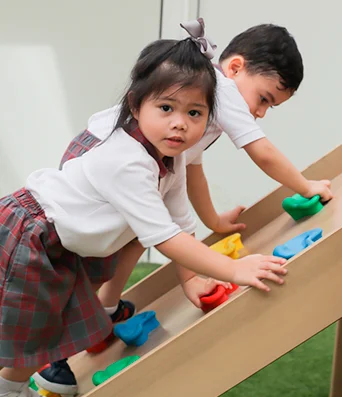
Physical Development
- Games that involve running, jumping, throwing and catching
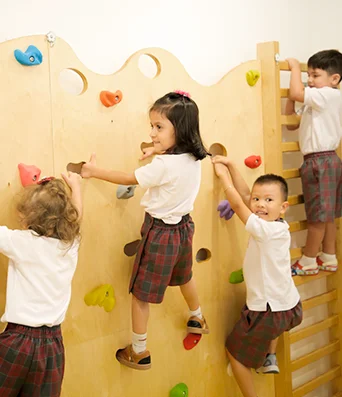
- Using equipment such as climbing frames
- Older children might also discuss healthy living and how they feel after exercise
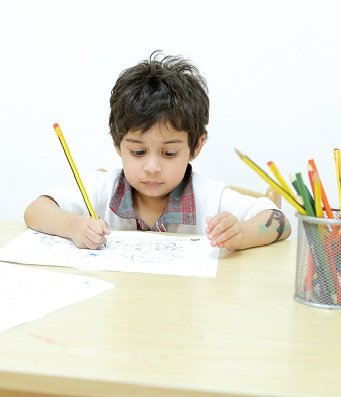
- Drawing, colouring, painting, and crafts
- Eating independently using cutlery
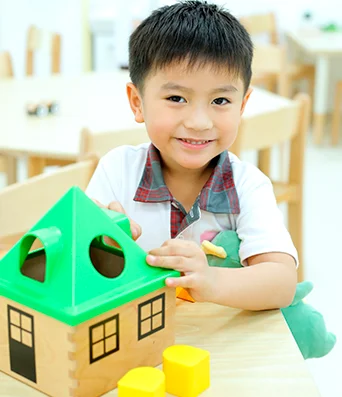
Personal, social, and emotional development
- Practicing sharing and taking turns
- Following instructions and rules and understanding why
- Exploring their own needs, interests and feelings
- Learning about and respecting each other’s differences
- Practicing independence and self-care
Literacy
- Singing nursery rhymes to explore rhymes and syllables
- Learning the alphabet and digraph sounds verbally
- Matching sounds with the letters of the alphabet
- Writing some letters, their names and other simple words
Mathematics
- Counting
- Identifying and drawing shapes
- Adding, subtracting, multiplying and dividing using objects
- Learning about weights and measures
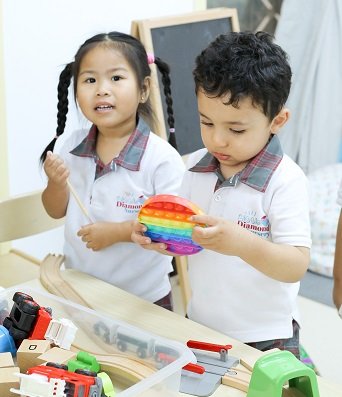
Expressive arts and design
- Painting, messy painting, drawing, and crafts
- Making music and singing
- Dancing, independently and as a group
- Roleplaying known stories (such as fairy tales) and their own stories
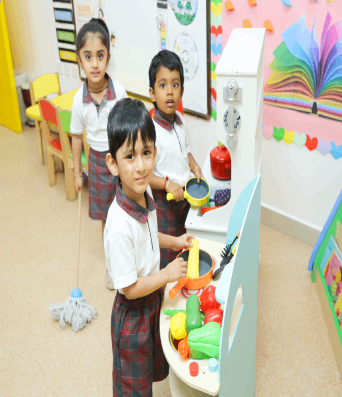
Understanding the world
- Exploring their senses of sight, smell, taste, hearing and touch
- Learning about nature and seasons, often outdoor learning in a local park or woodland
- Looking at maps
- Exploring cultures, religion and cultural and religious festivals
- Practical experiments with science, such as seeing which objects float in a tub of water
- Using computers or other technology to begin children’s technical skills